A strike shuts down a port.
Fuel prices spike.
A storm damages a major distribution hub.
A supplier fails.
Deliveries slow down, shelves begin to empty, and prices climb before most people understand what is happening.
The modern supply chain is efficient when everything works—but efficiency is not the same as resilience.
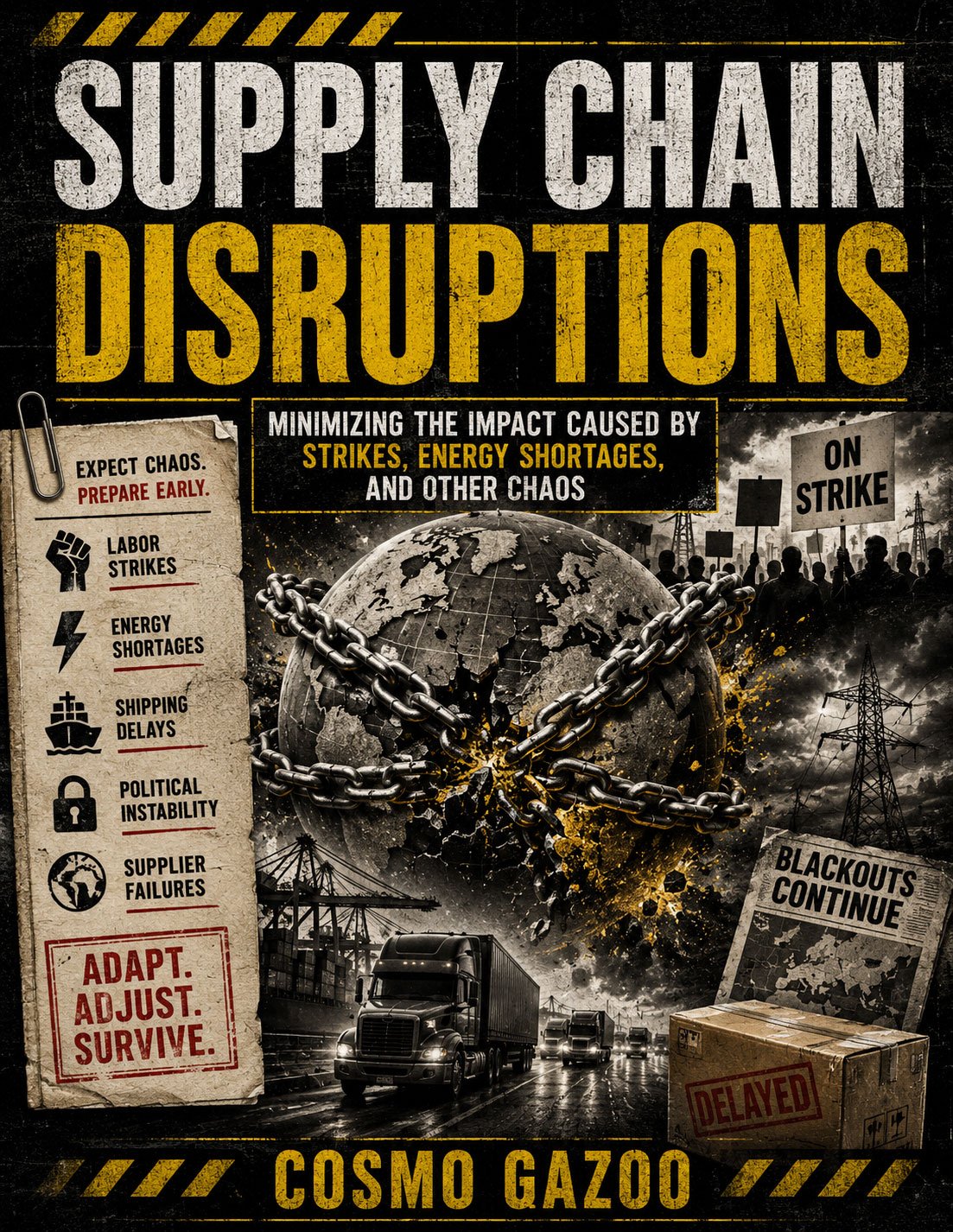
Supply Chain Disruptions: Minimizing the Impact Caused by Strikes, Energy Shortages, and Other Chaos is a practical guide to reducing your dependence on fragile systems before the next disruption reaches your household.
This is not about panic buying.
It is not about filling your home with equipment you do not understand.
It is about creating enough breathing room that a delayed shipment, fuel shortage, blackout, labor strike, or sudden price increase does not immediately become your emergency.
Expect Chaos. Prepare Early.
Supply chain problems rarely stay confined to one industry.
A transportation disruption can affect groceries.
An energy shortage can affect manufacturing, refrigeration, heating, and delivery costs.
A natural disaster can damage roads, ports, warehouses, and power systems at the same time.
Political instability or supplier failure can interrupt products manufactured thousands of miles away—but relied upon inside your home every day.
This report helps you identify those weak points and build practical alternatives around them.
Inside This Report, You’ll Learn How To:
Understand Where Disruptions Begin
Recognize the effects of labor strikes, energy shortages, natural disasters, global instability, resource shortages, and supplier failures before they become household-level problems.
Build a Useful Household Buffer
Learn how to gradually store food, water, medications, first-aid supplies, hygiene products, and household essentials without resorting to reckless panic buying.
Rotate Supplies Instead of Wasting Them
Use a simple first-in, first-out approach so your reserve remains useful, organized, and ready when needed.
Stop Depending on One Store or Supplier
Develop alternative sources through farmers’ markets, local farms, independent shops, cooperatives, niche online retailers, peer-to-peer marketplaces, and community relationships.
Prepare for Energy and Water Interruptions
Explore energy efficiency, renewable power, backup generators, fuel storage, water storage, filtration, and purification as layers of household resilience.
Become More Self-Sufficient
Reduce dependence on outside systems by growing food, preserving supplies, composting, repairing clothing, and learning basic household maintenance.
Protect Your Budget During Shortages
Prepare for sudden price increases, avoid wasteful panic buying, build an emergency fund, and invest gradually in tools that improve long-term resilience.
Build Local Support Before You Need It
Learn how resource sharing, bartering, skill exchanges, cooperative buying, and mutual-aid networks can make an entire community harder to destabilize.
You Do Not Need to Become Completely Self-Sufficient
You only need to become less vulnerable than you were yesterday.
- A few extra meals.
- A dependable water reserve.
- More than one place to buy essential goods.
- A basic repair skill.
- A backup source of power.
- A relationship with a local producer.
- A small emergency fund.
Each layer gives you more time, more options, and more control.
Together, those layers can prevent an inconvenience from turning into a crisis.
Preparedness Is Not Prediction
You do not need to know exactly what will happen next.
You only need to understand that disruption is possible—and that waiting until everyone else is competing for the same limited supplies is the most expensive and stressful time to begin.
Supply Chain Disruptions gives you a practical framework for preparing gradually, intelligently, and within your own circumstances.
No fantasy bunker.
No fear-driven shopping spree.
No assumption that one product will solve everything.
Just straightforward strategies for building household resilience across food, water, energy, finances, suppliers, skills, and community.
Adapt. Adjust. Survive.
The systems around you may be outside your control.
Your level of preparation is not.
Start creating your buffer now.
Build alternative sources.
Strengthen your household.
Reduce your dependence on systems that may not always deliver when you need them most.
Get Your Copy of
Supply Chain Disruptions
Minimizing the Impact Caused by Strikes, Energy Shortages, and Other Chaos
Prepare before the shelves are empty.