
Every search.
Every account.
Every old photo.
Every forgotten signup.
Every app you gave permission to five years ago.
It all adds up.
Your digital footprint is not just your social media profile. It is the trail you leave behind every time you use the internet.
Your name.
Your phone number.
Your old addresses.
Your buying habits.
Your location history.
Your search history.
Your deleted posts that may not really be gone.
Your data sitting inside companies you barely remember joining.
And here is the part most people ignore:
That information can be tracked, collected, sold, leaked, searched, analyzed, and used against you.
Not because you are famous.
Not because you are doing anything wrong.
Because that is how the modern internet works.
Your data is the product.
It’s Time to Become Harder to Find
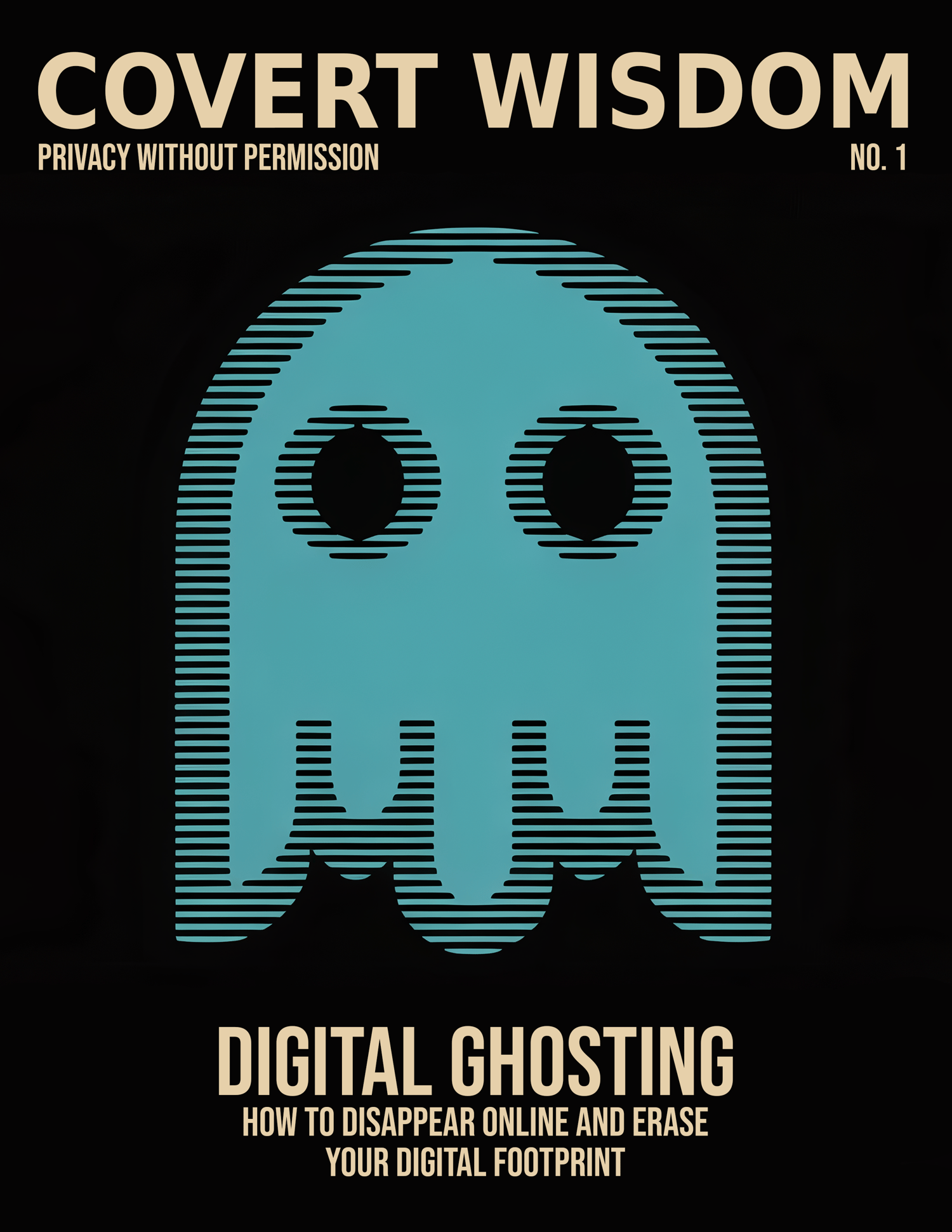
Digital Ghosting: How to Disappear Online and Erase Your Digital Footprint is a practical privacy guide for anyone who wants to reduce their exposure, clean up their online presence, and take back control of their personal information.
This is not a fantasy guide about vanishing into the woods.
This is a grounded manual for people living in the real world who still use the internet but no longer want to be easy prey for data brokers, advertisers, stalkers, hackers, search engines, and careless platforms.
You do not need to be paranoid to care about privacy.
You just need to understand the game.
Your Online Life Has More Leaks Than You Think
Most people think their digital footprint is simple.
They think:
“I don’t post much.”
“My accounts are private.”
“I already deleted that old stuff.”
“I’m not important enough for anyone to care.”
That is exactly how people get sloppy.
Your online trail is bigger than your posts.
It includes public search results, people-finder websites, third-party data brokers, old social accounts, abandoned email addresses, forgotten apps, cached pages, exposed passwords, browser trackers, connected accounts, device histories, cloud backups, and location data.
Some of it you created.
Some of it was collected quietly in the background.
Some of it was sold.
Some of it may already be sitting in databases you never agreed to join.
This Issue Shows You How to Start Cleaning It Up
Covert Wisdom #1 gives you a step-by-step approach to reducing your online presence and protecting what remains.
Inside, you will learn how to:
- Find out what information about you is already public
- Remove personal information from search engines
- Contact websites and request removal of exposed data
- Opt out of data broker sites
- Delete or deactivate social media accounts
- Scrub old posts, photos, comments, and connections
- Unlink third-party apps and connected accounts
- Secure your remaining accounts with stronger passwords and two-factor authentication
- Track down old accounts you forgot existed
- Delete old emails and reduce sensitive inbox clutter
- Wipe personal data from phones, computers, and storage devices
- Control app permissions and location tracking
- Browse with more privacy using VPNs, Tor, private browsers, and tracker blockers
- Use disposable accounts and aliases for long-term privacy
- Monitor your digital footprint so new traces do not pile up again
- This is the kind of guide you use with a notebook open.
Search.
Delete.
Opt out.
Lock down.
Repeat.
Privacy Is Not About Hiding
Privacy is about control.
It means you decide who gets access to your information.
- Not data brokers.
- Not random searchers.
- Not every app you ever downloaded.
- Not platforms that change their settings and hope you don’t notice.
- Not advertisers building a profile from every click.
The more personal information you leave exposed, the easier you are to track, target, impersonate, manipulate, or embarrass.
The less you leave behind, the harder you are to exploit.
That is the point of digital ghosting.
You are not trying to become invisible in some movie-style way.
You are reducing the surface area.
You are making yourself harder to profile.
You are closing open doors.
This Is for You If...
You have old accounts scattered across the internet.
You searched your name and found things you did not expect.
You are tired of people-search sites listing your personal details.
You want to delete old social media history.
You want to protect yourself from identity theft and data leaks.
You want fewer companies tracking your behavior.
You want better passwords, better account security, and better browsing habits.
You want a cleaner separation between your real identity and your online activity.
You want to stop feeding the machine so much free information.
You May Never Erase Everything
Let’s be real.
The internet has a long memory.
Some data may be archived.
Some companies may hold records.
Some information may be copied, cached, scraped, or buried in systems you cannot directly access.
But that does not mean you do nothing.
- You can reduce the damage.
- You can remove what is public.
- You can lock down what remains.
- You can stop creating easy trails.
- You can build better habits moving forward.
That alone puts you ahead of most people.
Become Less Searchable. Less Trackable. Less Exposed.
The old internet trained people to overshare.
The new internet punishes them for it.
Your personal data has value. That is why companies collect it. That is why brokers sell it. That is why hackers want it. That is why platforms make it so easy to reveal too much and so annoying to clean it up later.
Digital Ghosting gives you the starting map.
Not theory.
A real privacy cleanup path.
Search yourself.
Remove what you can.
Delete what you no longer need.
Secure what must stay.
Browse smarter.
Share less.
Monitor often.
Get Covert Wisdom #1 - Digital Ghosting Today
If you are ready to take your privacy seriously, start here.