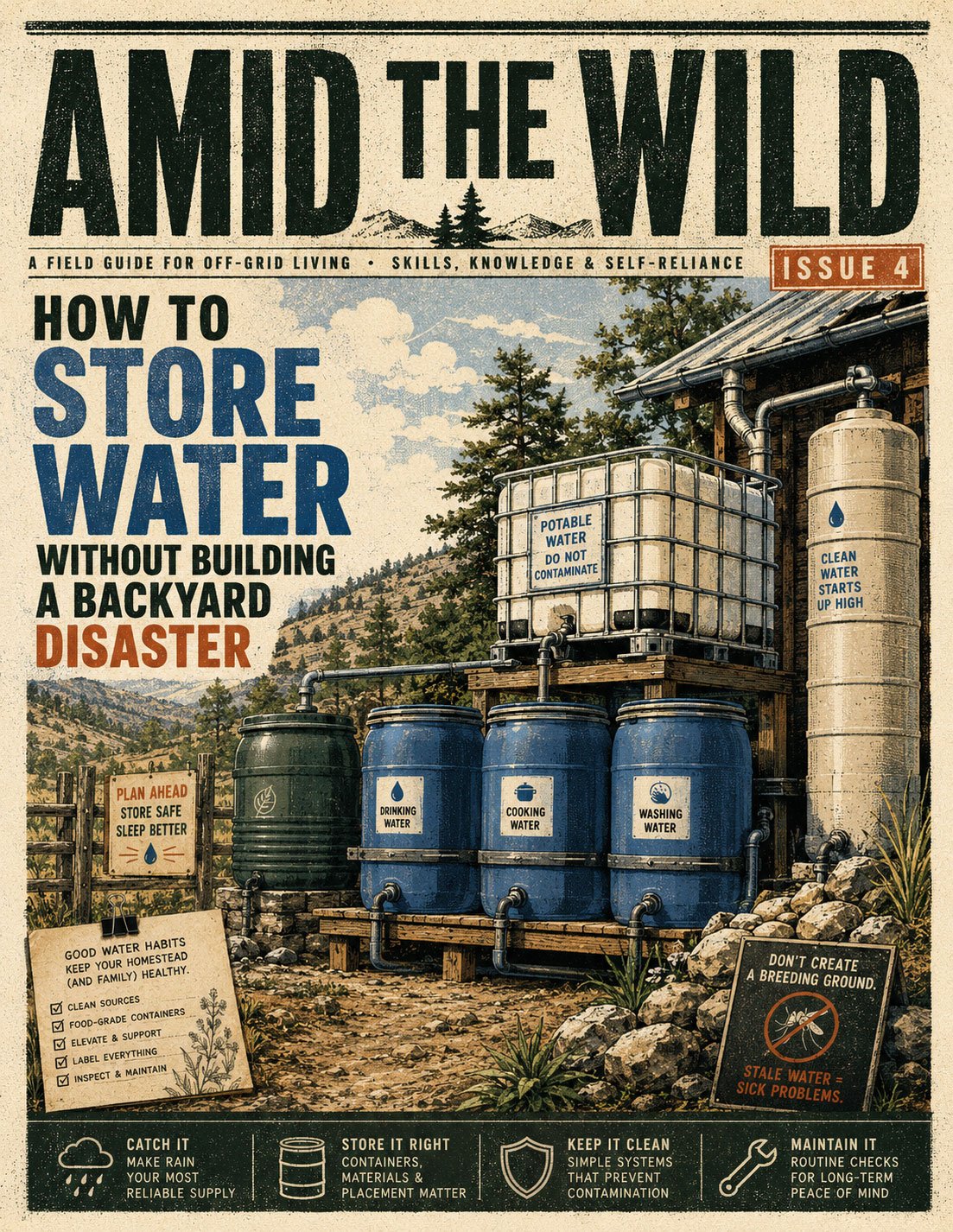
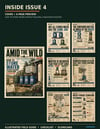
Amid The Wild 4 - How To Store Water Without Building A Backyard Disaster
On Sale
$7.00
$7.00

Storing water sounds simple.
Find a barrel. Fill it up. Put it somewhere behind the house.
Done.
Except that is how people end up with mystery containers, unstable platforms, mosquito breeding grounds, contaminated hoses, sun-damaged plastic, and hundreds of gallons of water they are no longer sure they can use.
Amid The Wild Issue 4: How to Store Water Without Building a Backyard Disaster shows you how to think beyond the container and build a water-storage system you can actually trust.
This is not a fear-driven prepper manual.
It is a practical, heavily illustrated field guide for people who want a sensible reserve without turning their property into a maze of random tanks, pipes, and forgotten barrels.
A useful reserve does more than hold gallons.
It must:
Miss one of those pieces and your emergency supply can become its own emergency.
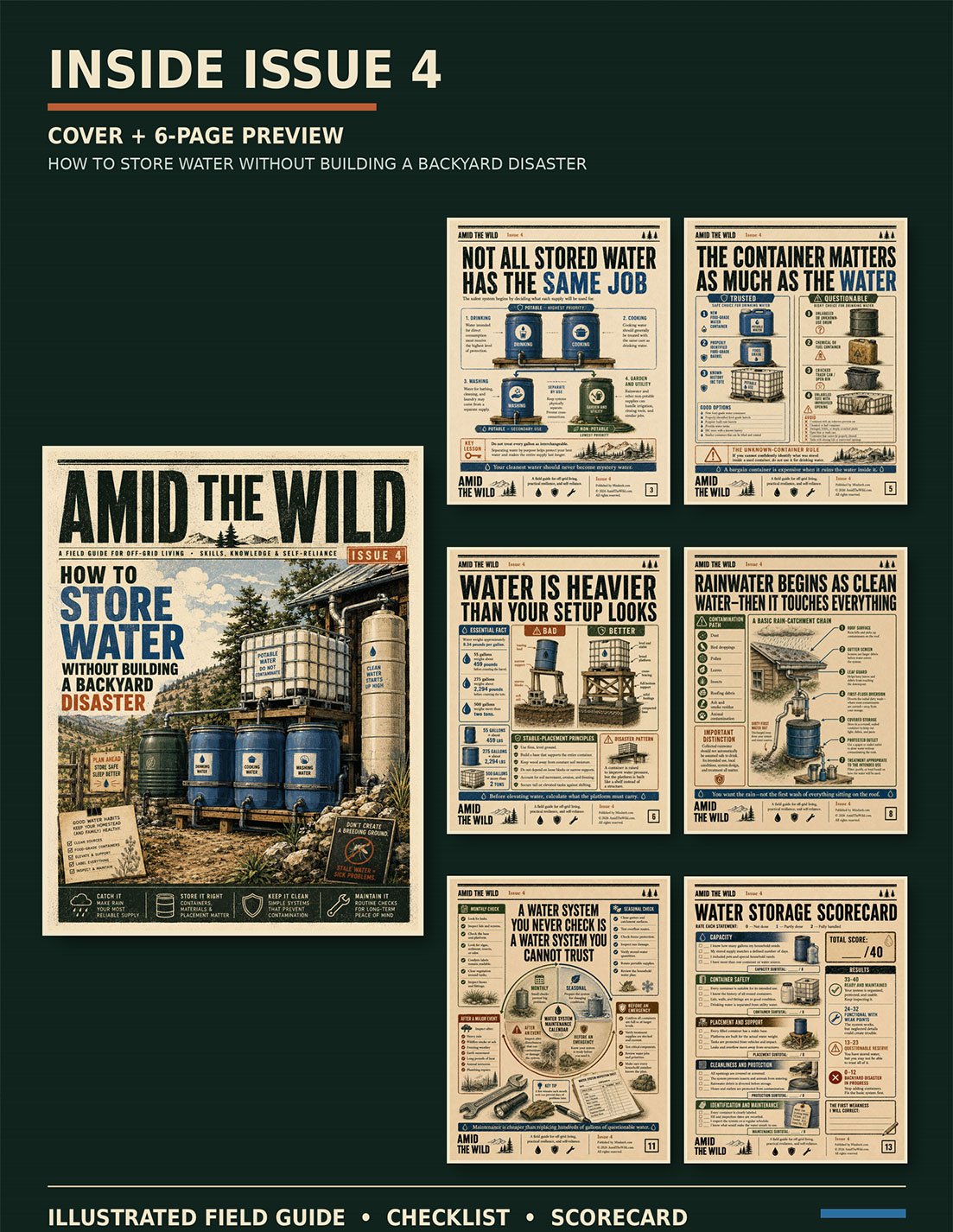
This issue walks through the complete system one piece at a time.
Not every gallon needs to meet the same standard.
Learn how to separate water for:
Protect your cleanest water by giving every container a defined job.
Avoid filling the yard with random containers and hoping it is enough.\
Use a simple calculation based on:
The issue compares minimum, working, and extended reserves so you can choose a realistic target.
A cheap container is not a bargain when it ruins everything stored inside it.
See the difference between dependable options and questionable ones, including:
You will also learn the most important reused-container rule:
When you cannot confidently identify what was stored inside it, do not use it for drinking water.
Water weighs approximately 8.34 pounds per gallon.
That means:
The issue shows the difference between a dangerous improvised platform and a stable base built to carry the actual load.
Because a water tank should be supported like a structure—not placed on something that merely looks like a shelf.
Where you place a tank affects:
A detailed illustrated site map shows how tank placement interacts with roof catchment, drainage, fuel storage, vehicle paths, shade, and the home foundation.
Rain may begin clean.
Then it touches roofing material, dust, pollen, bird droppings, leaves, insects, ash, and animal contamination.
Follow the complete rain-catchment chain:
The guide makes an important distinction:
Collected rainwater should not automatically be assumed safe to drink.
A water system must block:
An enlarged tank diagram identifies the major protection points, including screened vents, sealed lids, covered inlets, protected outlets, raised spigots, and safe drainage routes.
Mystery water is not a reserve.
Every container should identify:
The issue includes example labels, a simple color system, and waterproof tag ideas that make the entire supply easier to understand at a glance.
A water system you never check is a water system you cannot trust.
Use the illustrated maintenance calendar to organize:
Know what to inspect after heavy rain, wildfire ash, freezing weather, intense heat, animal intrusion, ground movement, or plumbing repairs.
Work through the entire setup, including:
Finish with one clear action to improve your system next.
Rate your setup across five major areas:
Your final score reveals whether the system is:
This issue is for:
You do not need a huge tank farm.
You do not need an industrial installation.
You need a clear purpose, safe containers, solid support, protected openings, readable labels, and a maintenance routine you will actually follow.
Amid The Wild combines practical information with the look of an old field manual, rural hardware catalog, and underground survival zine.
Inside are:
It is built to be useful—not padded with generic survival advice.
The real goal is not to collect the biggest pile of containers.
The goal is to know that when the pump stops, the road closes, or the normal supply is interrupted, you still have clean, usable water waiting.
Get Amid The Wild Issue 4: How to Store Water Without Building a Backyard Disaster today.
Build a reserve you understand.
Protect the water you depend on.
And stop a few small shortcuts from becoming one very large backyard problem.
© 2026 Mindzerk. All Rights Preserved. Unauthorized duplication will be met with quiet subversion. A Proud